Work
We don’t have client logos yet.
So here is software we built and run ourselves — with real users, still getting commits. Not case studies, not a rendering. The actual product.
No invented logos, no made-up savings percentages, no testimonials from companies that don’t exist. When there are clients worth showing, they’ll go here with their permission.
Built and run by us · live · paying users
FEXmagnet
A CRM and calling system for insurance agents. Contacts, a pipeline with stages, a work queue that decides what to do next, activity dashboards, goal tracking, and a support desk — plus telephony, compliance rules on when and how often a number can be called, and a support inbox we answer.
It is the same shape as the work described everywhere else on this site: states, owners, queues, and rules, built around how a specific business actually operates. The difference is that it is ours, so we can show you the inside of it.
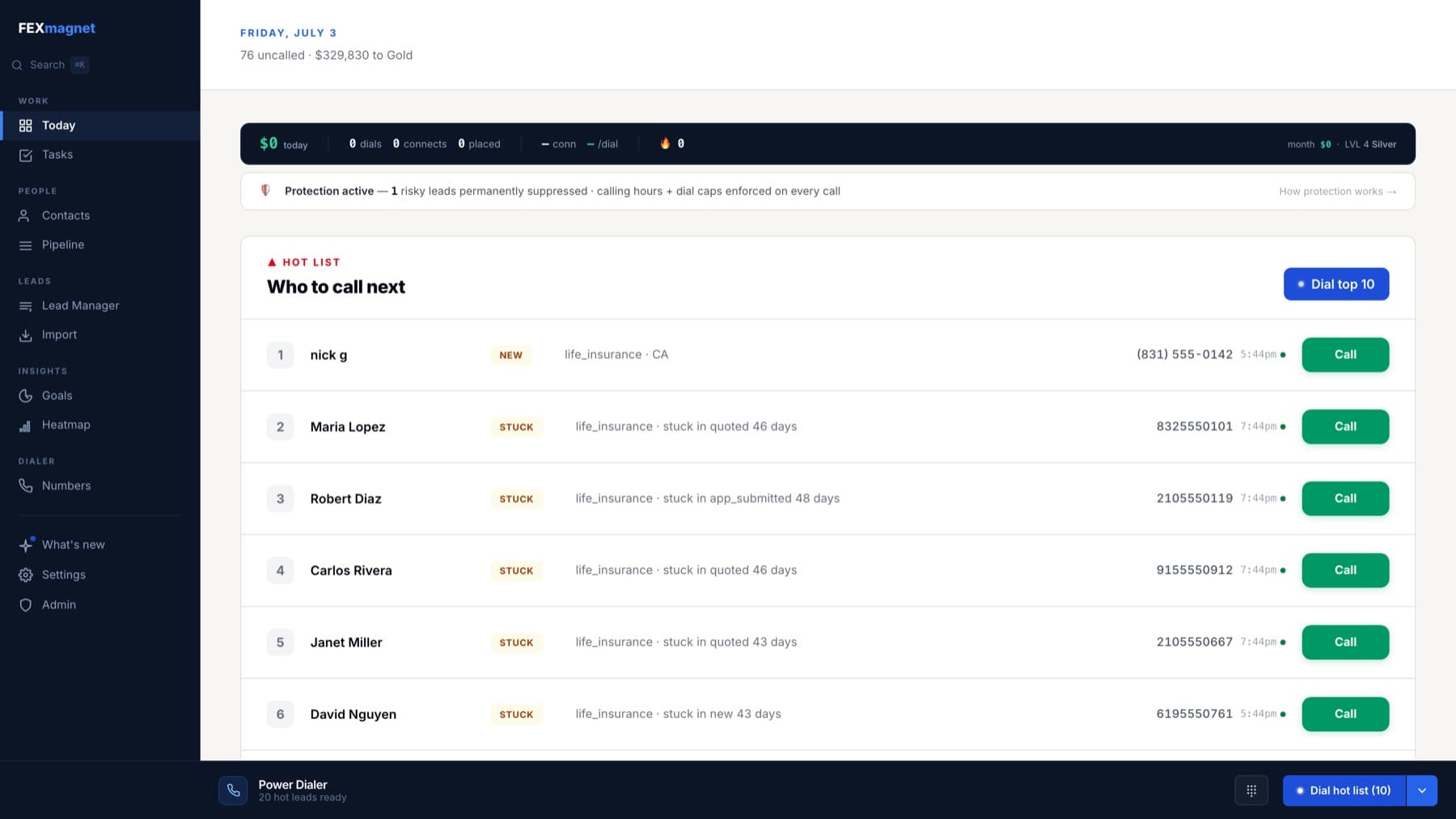
A queue that decides what to work on next, and shows why each thing surfaced. Seeded demo data — no customer information. 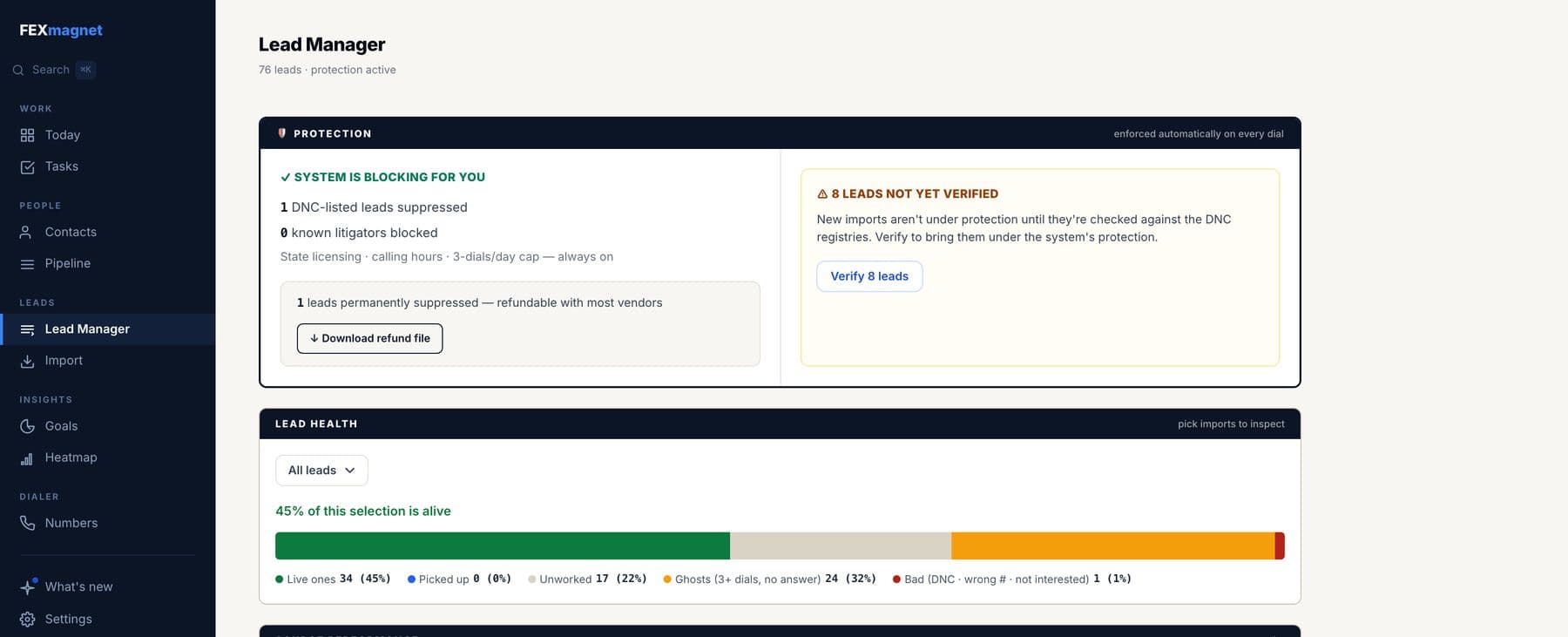
Rules enforced automatically rather than remembered. This is the part no off-the-shelf product does, because the rules belong to one business. Seeded demo data — no customer information. 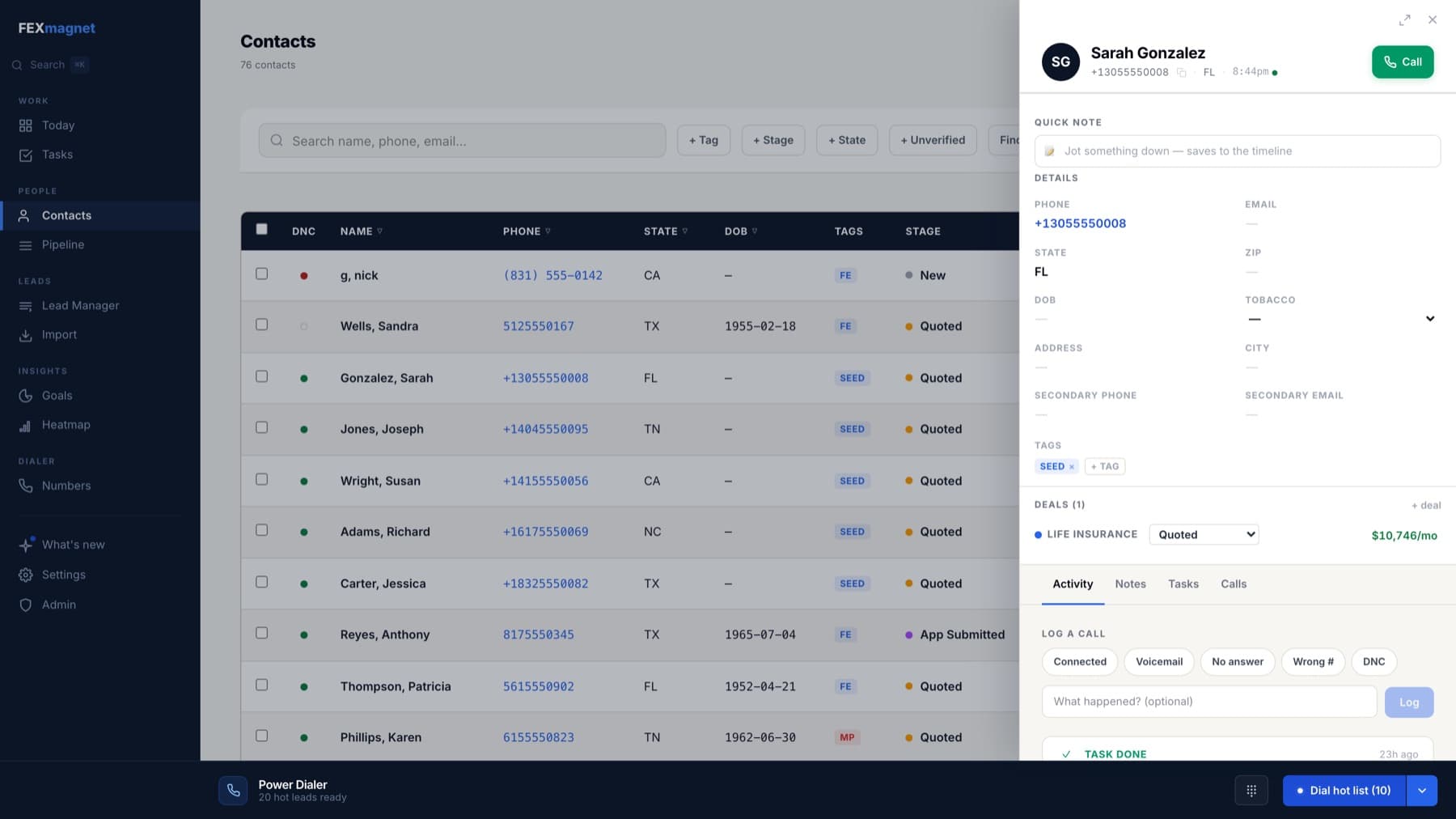
The record opens over the list rather than navigating away, so nobody loses their place in the queue. Seeded demo data — no customer information. 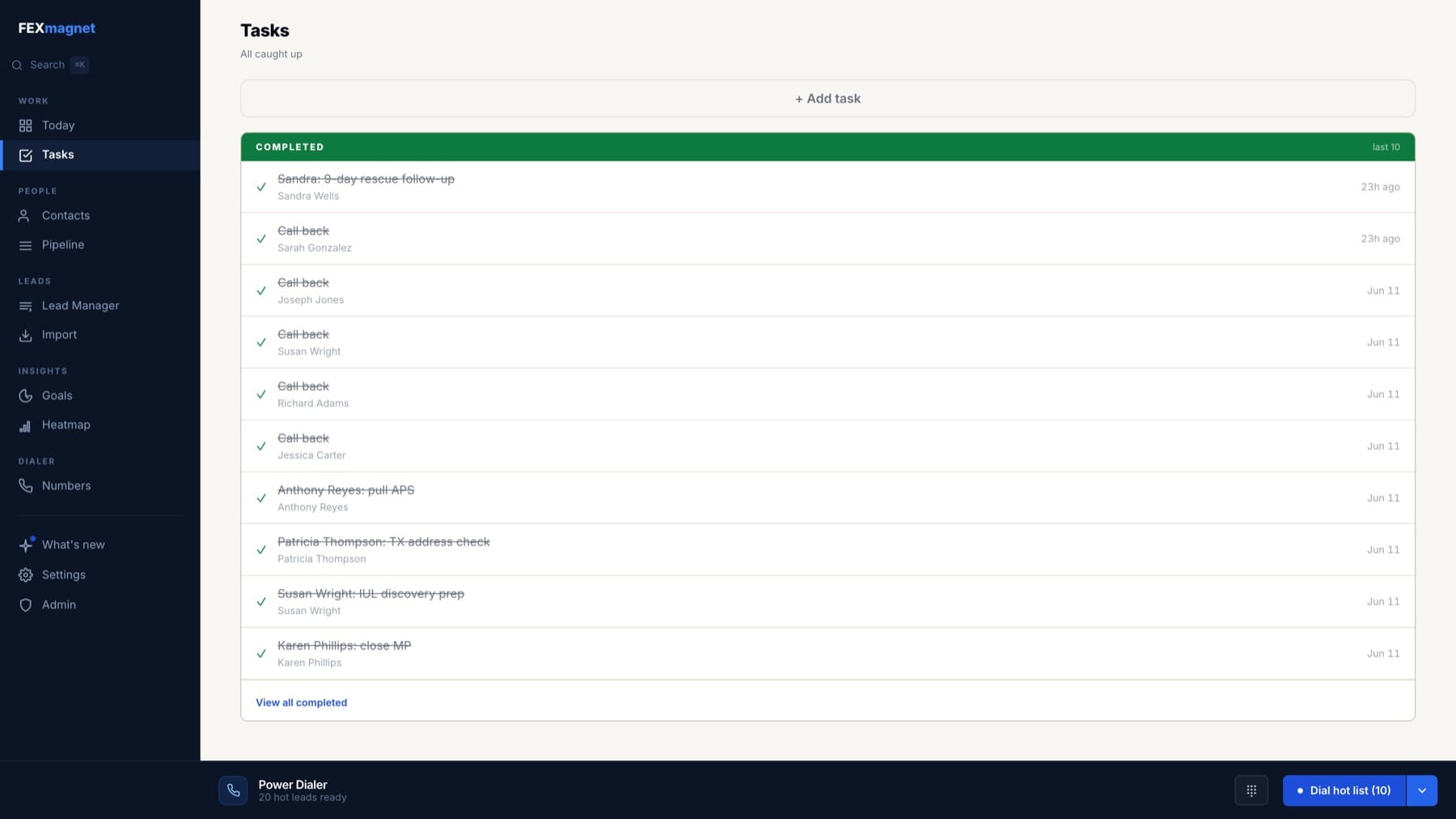
Follow-ups tied to the record they belong to, so nothing depends on someone remembering. Seeded demo data — no customer information.
Also ours · live
A quoting tool over 29,000 rate rows
Agents compare products across five carriers and get a price in seconds, from rate tables that used to be PDFs. New rate sheets are uploaded and read automatically rather than retyped.
It is the “documents become validated data” problem, solved once for a real operation — the same job as turning a supplier’s price list or a customer’s PO into something your systems can use.
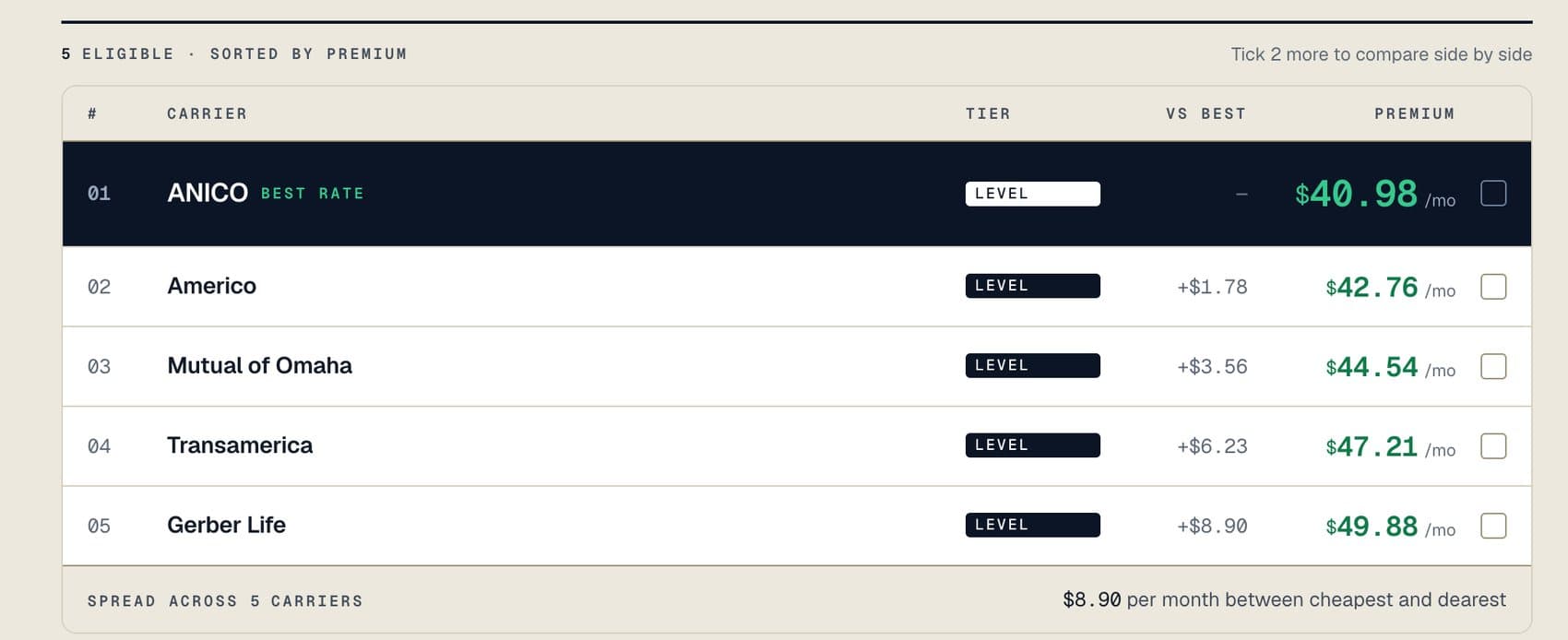
One entry, every carrier, ranked cheapest first — with the gap to the best rate on each row. The comparison used to mean opening five PDFs. 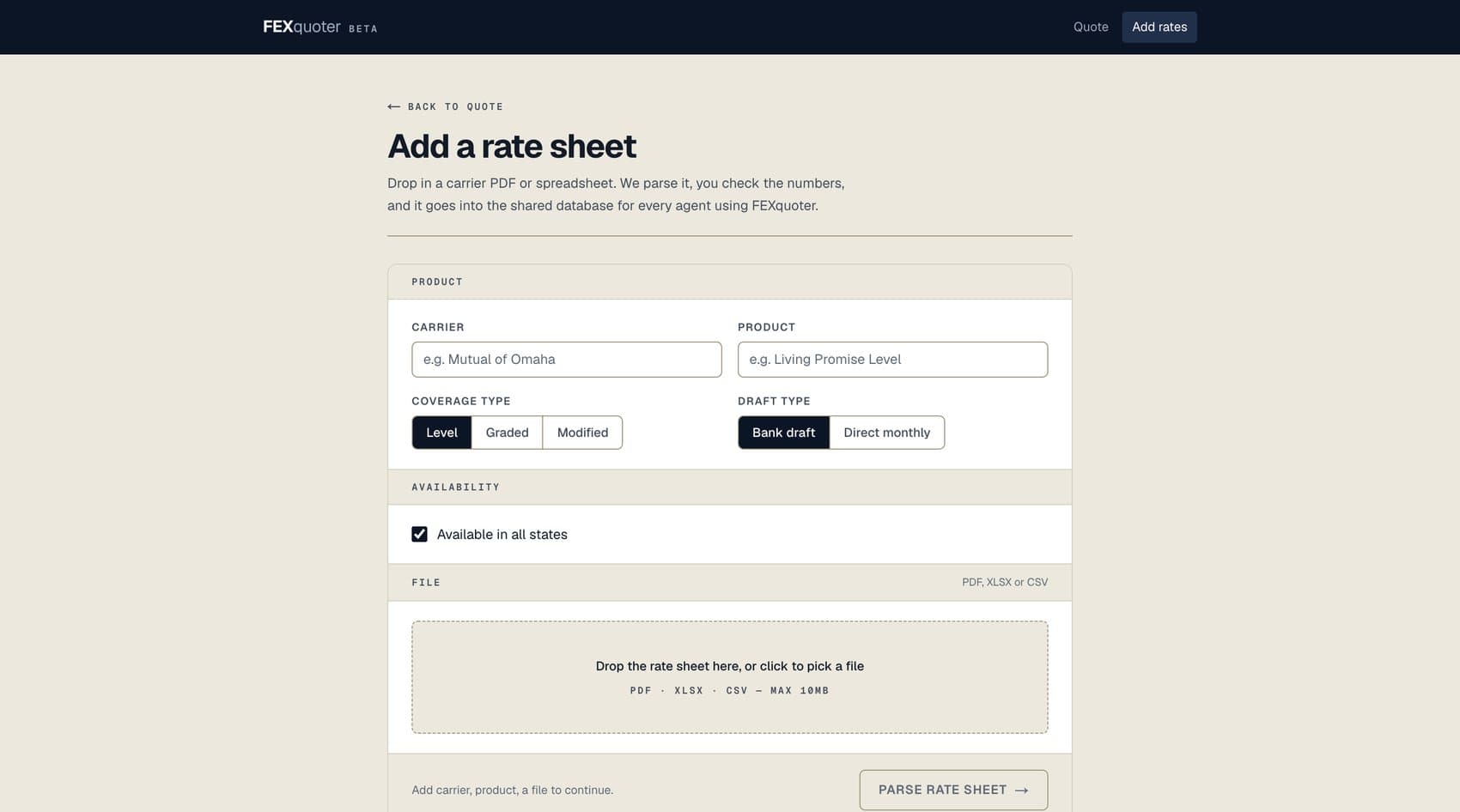
A new rate sheet is dropped in as a PDF or spreadsheet and parsed into the shared rate table. Nobody retypes 29,000 rows.
Example systems
Systems we’ve built as examples, not for a client
Clearly labelled as examples, with invented companies and invented data. Useful for seeing the shape of a system for a problem we haven’t shipped for a customer yet. The first one below is software you can actually click through.
- Example system · clickablePurchase ApprovalsA working approval system for an invented distributor. Three roles, real routing, an approval threshold you can change in the page. Not a client’s system.
- ConceptSpecial Pricing Control TowerHow a distributor could run special-pricing requests, margin floors, and vendor claims in one queue instead of inboxes and spreadsheets.
Your workflow could be the next thing on this page.
A Workflow Review maps one of your processes and shows what a purpose-built system would change.